Spring Activities That Keep Learning Meaningful and not just cute
Spring brings a shift in the classroom. Students have been in school most of the year, so this means routines have been established, and their reading and math skills are more developed. I always like to incorporate spring-themed activities into our instruction to spice up our learning, while keeping it grounded in real skills.
Here are a few ways I like to approach spring learning that stay hands-on, purposeful, and manageable.
Using Spring Word Problems to Strengthen Math Thinking
Spring is a great time to lean into word problems, especially once students have built some foundational number sense.
Rather than focusing on one strategy, I like to encourage students to solve the same problem in different ways. This helps them see that math is about thinking, not just getting an answer.
For example, students might solve spring-themed word problems by:
- Using a number line
- Modeling with a ten frame
- Drawing a picture
- Breaking numbers apart with a number bond
- This kind of math thinking helps students explain their thinking and choose strategies that make sense to them.
I use these printables as early finisher work. While I’m pulling a small math group, I have students grab their math folders to complete math activities after they turn in their exit tickets.
What I like is that there are a variety of activities too. Students can complete this activity independently, but there are teacher-led activities that can be done in small groups.
Connecting Learning to the Seasons
Spring also opens the door to bigger conversations about how the world changes over time.
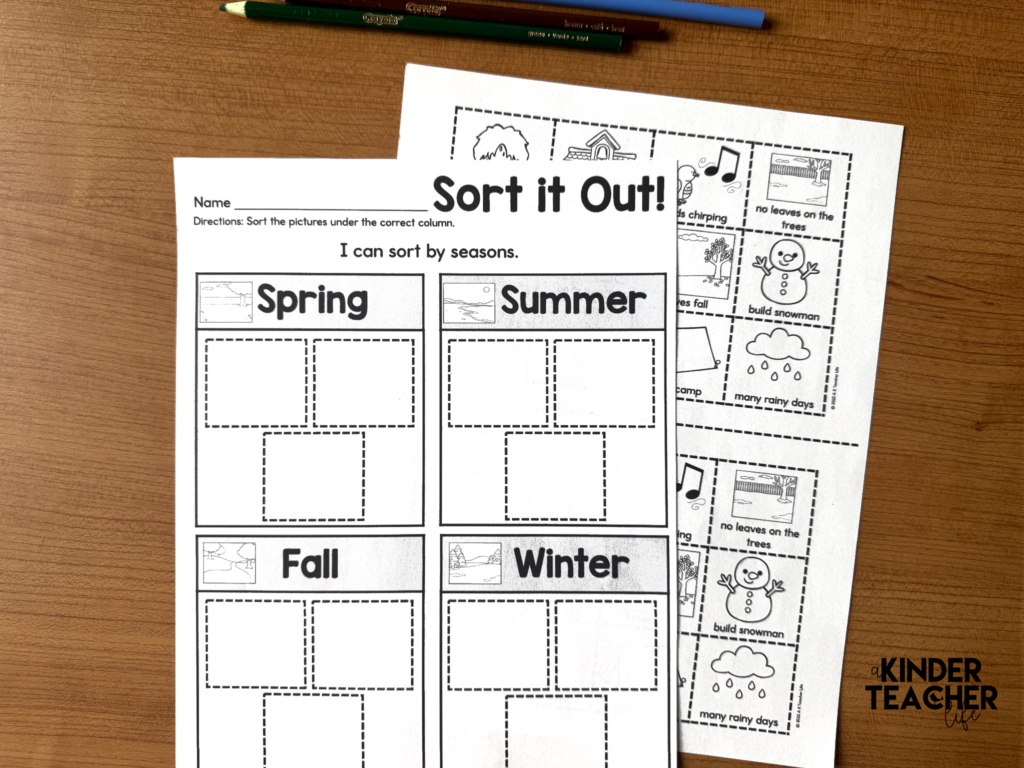
A four-season sort is a simple way to revisit what students already know while helping them compare and categorize characteristics of each season.
This type of activity works well:
- As a whole-group discussion starter
- In small groups
- As an independent review
There’s a digital version of the sort included, so you can complete it together. It also includes an e-book, so you don’t have to search for a season’s book for students to listen to.
To add a bit more creativity, I had students collaborate to create collages of the different seasons. They color, cut, and glue animals that you would see during that season, and they draw a picture of the setting.
Exploring Life Cycles in a Hands-On Way
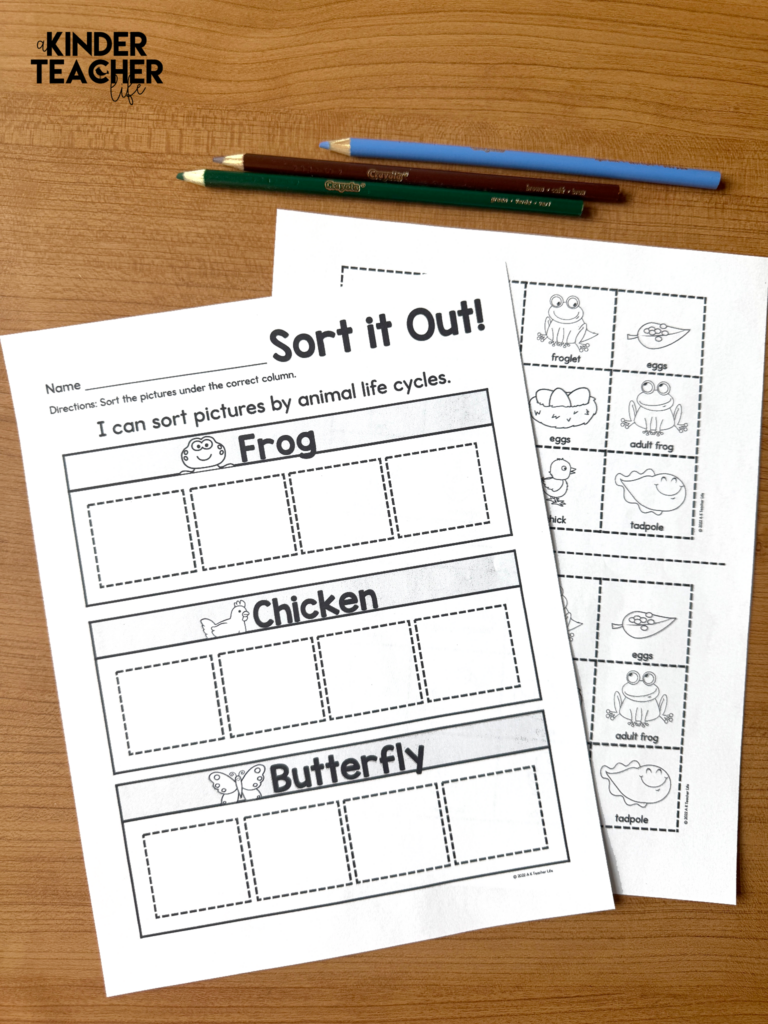
Spring is a natural fit for introducing or revisiting life cycles. Students can do research on an animal’s life cycle and write about it.
In Kindergarten, we all wrote about the same life cycle (usually a frog or a butterfly).
In First grade, we studied multiple life cycles over a few weeks during science and they picked a life cycle we explored together to write about.
In Second grade, we studied one or two life cycles and they picked a life cycle they wanted to research and wrote a book.
This activity allows students to:
- Sequence stages
- Talk through changes
- Notice patterns across different life cycles
If you have limited time to teach life cycles, I would recommend having students still read and learn about different life cycles, and then have them sort them using my life cycle sorts.
Reflecting Through Spring Writing Prompts
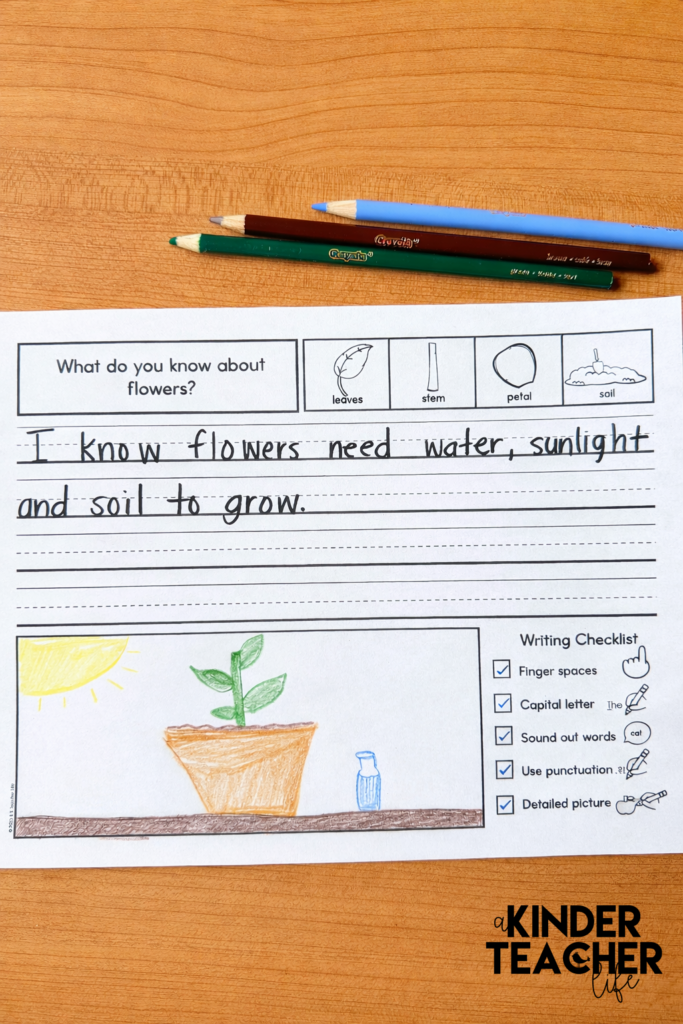
Spring is also a lovely time to bring in more reflective and opinion writing.
Spring journal prompts give students space to:
- Write about changes they notice
- Connect learning to real life
- Practice writing stamina in a low-pressure way
- Apply writing conventions
These prompts can be used during morning work, writing centers, or as a calm transition activity.
Science: Build a Bird Beak
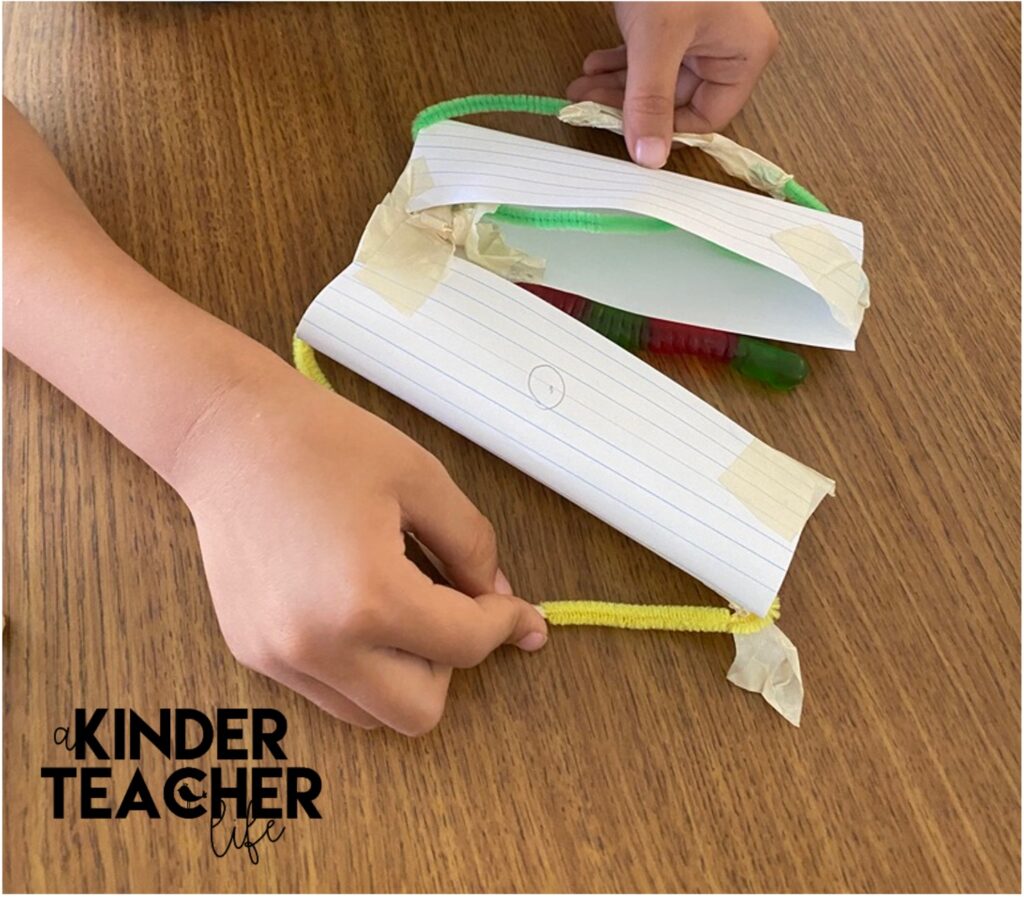
One of my favorite S.T.E.A.M. activities is having students build a bird beak by following the engineering design process. Using everyday school items, students construct a bird beak that can lift a gummy worm, a marshmallow, and a Cheerio. This is a great collaborative project and encourages students to try and try again if they don’t get it right the first time.
This resource includes everything: an e-book about adaptations, posters, science name tags, recording sheets, and digital slides to guide you through the activity.
Keeping Spring Learning Balanced
With the right activities, students can stay engaged while continuing to build important skills across subjects. Word problems, sorting activities, and thoughtful writing all offer ways to keep learning meaningful and celebrate the season.
If you’re planning spring instruction right now, these types of activities can slide easily into your routine and support the learning you’re already doing.
Happy teaching,
Tee